
Why Local Honey Costs More Than Store-Bought (And Why It's Worth It)
Local honey costs $10-20 per pound while imports enter the US at under $1.55. Here's what drives that gap and why the local price is the honest one.
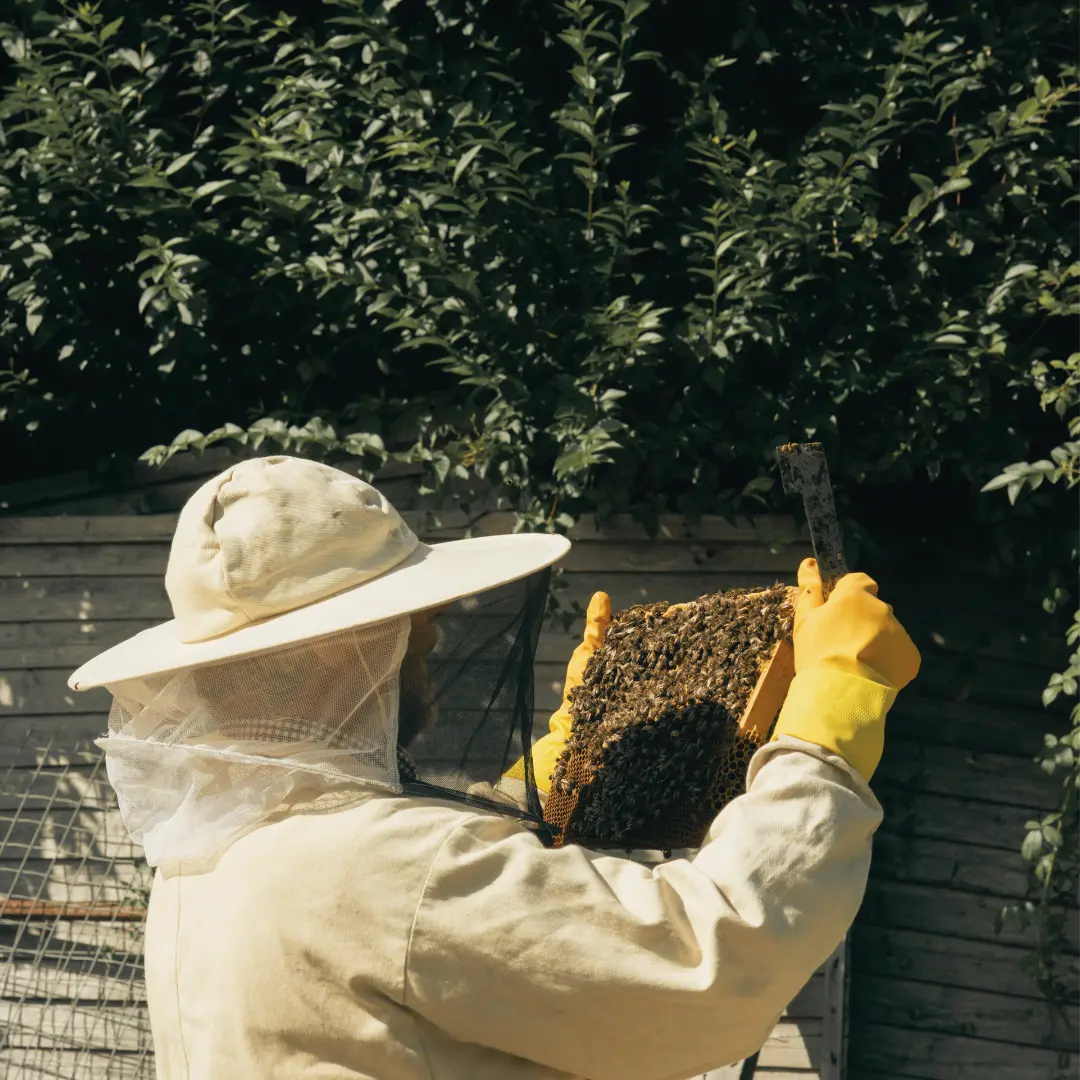
A pint of raw local honey at a farmers market typically costs $10 to $15. The same volume in a grocery store bear bottle runs about $5 to $7. That's a gap big enough to make anyone pause, and it's the reason plenty of people who are curious about local honey stick with the commercial aisle instead. The assumption is that the beekeeper is charging a premium. The reality is the opposite. The local honey price reflects the actual cost of producing real honey in small batches from managed colonies. The grocery store price is the anomaly: kept low by an imported product that enters the US at under $1.55 per pound and is often blended, heavily processed, and sometimes adulterated. Understanding where the money goes in both products makes the price difference not just explainable but obvious.
What it actually costs to keep bees
Beekeeping isn't cheap to start and it isn't free to maintain. A single hive setup (the boxes, frames, foundation, bottom board, inner cover, outer cover, and a package of bees or a nucleus colony to populate it) runs $500 to $1,000 depending on equipment quality and the current price of bees. A hobby beekeeper managing five hives has $2,500 to $5,000 invested before they've harvested a single ounce.
Annual maintenance costs add up. Mite treatments (even organic-approved ones like oxalic acid), replacement frames and foundation, sugar syrup or fondant for supplemental feeding in lean years, protective gear, extraction equipment, jars, labels, and fuel to get to and from hive locations. A beekeeper managing 10 hives can easily spend $1,000 to $2,000 per year on supplies and upkeep, not counting their time.
And then there are the losses. Colony mortality in the US averages 30 to 40% annually, according to the Bee Informed Partnership's national survey data. That means a beekeeper who starts the year with 10 hives can expect to lose three or four of them over the winter. Replacing those colonies costs $150 to $250 each for a new package of bees or a nuc. Some years the losses are worse. A particularly harsh winter, a varroa mite explosion, or a bad case of nosema can wipe out half an operation in a season.
The labor is unpaid for most small producers. A hobby or sideline beekeeper is doing hive inspections, swarm management, feeding, mite monitoring, harvesting, extracting, bottling, labeling, and selling on their own time. None of that is accounted for in the price of the jar unless the beekeeper is running a full-time commercial operation, and most local honey sellers are not. They're people with other jobs who keep bees because they care about it, and the honey sales cover some of their expenses.
What a hive actually produces
The economics get tighter when you look at yield. An average honey bee colony in the US produces roughly 30 to 60 pounds of surplus honey per year: surplus meaning the honey left over after the beekeeper leaves the colony enough to survive the winter. In a bad year (drought, excessive rain, colony health issues) that surplus can drop to zero. In a great year, a strong colony might produce 80 to 100 pounds. But great years aren't the norm.
A hobby beekeeper with 10 hives in an average year might harvest 300 to 600 pounds of honey. At $15 per pound retail, that's $4,500 to $9,000 in gross revenue, before deducting the cost of jars, labels, equipment, mite treatments, replacement bees, market booth fees, fuel, and the hundreds of hours of labor. The net income, if you're generous with the math, is modest. If you account for the beekeeper's time at anything close to minimum wage, most small operations lose money or break even.
This is why local honey costs what it costs. There isn't a fat margin being added on top. The price per pound at a farmers market is what it takes to cover the real expenses of producing a limited, seasonal, labor-intensive agricultural product in small quantities. How honey is made and why production is limited.
How imported honey gets so cheap
On the other end of the spectrum, imported honey enters the US at wholesale prices of $0.84 to $1.55 per pound, according to USDA trade data. That's less than the cost of the jar and label for most local producers.
Those prices are possible because of scale, labor costs, and corner-cutting. The largest honey-exporting countries (Argentina, India, Vietnam, Brazil) operate at industrial scale with lower labor costs than the US. Some producers manage thousands of hives with migrant labor forces. In countries where labor is cheap and regulatory oversight is limited, the economics of producing honey at under a dollar per pound are achievable.
But even accounting for labor and scale, those prices raise questions. The USDA's average domestic producer price for honey is roughly $2.69 per pound. Producing genuine honey below $1.55 per pound (after accounting for hive management, extraction, packaging, and international shipping) requires either very cheap labor, very high per-hive yields, or something that isn't entirely honey.
The fraud angle is documented. FDA testing of imported honey found that 10 to 14% of samples were adulterated: cut with rice syrup, corn syrup, or other cheaper sweeteners. Honey transshipment (routing product through intermediary countries to dodge tariffs and obscure origin) adds another layer. Ultra-filtering removes pollen, making it impossible to trace geographic origin. These practices aren't universal in the import market, but they're common enough to explain how some product reaches the US at prices that don't make economic sense for genuine honey.
The grocery store retail price of around $7.85 per pound reflects this import-dominated supply chain. When you buy the bear bottle for $6, you're buying a product that was purchased at bulk import prices, processed, blended, and marked up through distribution. The margin goes to the packer, the distributor, and the retailer. Almost none of it reaches an actual beekeeper.
The regional pricing spectrum
Local honey prices aren't uniform across the country. Geography plays a significant role, and understanding the range helps set expectations.
In rural areas with active beekeeping communities and lower cost of living, raw local honey sells for $8 to $12 per pound. This is common across the rural South, Midwest, and Mountain West, where beekeepers often sell from farm stands, at small-town markets, or by word of mouth. The overhead is low, the audience is price-sensitive, and the competition from other local sellers keeps pricing moderate.
In suburban markets (the larger farmers markets serving commuter communities) prices tend to settle between $12 and $16 per pound. The audience is willing to pay a premium for artisanal and local products, the market booth fees are higher, and the beekeeper's costs are reflected in the price.
In urban areas, particularly in cities like New York, San Francisco, Portland, and Austin, local honey can reach $18 to $25 per pound or more. Urban beekeeping is expensive: rooftop hive installations, compliance with city regulations, limited foraging area, and the general cost of operating any business in a high-cost city all push the price up.
Specialty varietals command their own premiums regardless of geography. Sourwood honey routinely sells for $20 or more per pound. Tupelo can reach $25 to $40. These prices reflect genuine scarcity: narrow bloom windows, limited production regions, and high demand from enthusiasts who know what they're looking for. A guide to honey varietals and what they cost.
Bulk buying and getting more value from local honey
If the per-jar price of local honey feels steep, buying in larger quantities usually brings the cost per pound down significantly. Most beekeepers offer bulk pricing, even if they don't advertise it prominently.
A quart mason jar (roughly three pounds of honey) typically runs $18 to $30, which works out to $6 to $10 per pound: often cheaper per unit than the small jars. Half-gallon and gallon containers, where available, bring the price down further. Some beekeepers sell five-pound or even twelve-pound pails to regular customers at wholesale-adjacent pricing.
Ask your beekeeper about end-of-season pricing. As harvest wraps up in late summer and fall, some producers are motivated to move remaining inventory before the off-season. This is the best time to stock up: buy two or three quart jars of different seasonal harvests and you'll have enough to last through winter and spring.
Honey doesn't spoil. It crystallizes, but that's normal and easily reversed. A gallon of raw local honey stored at room temperature will be just as good in two years as it was on the day you bought it. Buying big isn't risky: it's smart. Why crystallization is normal and how to handle it.
The price difference is the point
The gap between a $6 grocery store bear and a $15 farmers market jar isn't a markup. It's a measurement of two fundamentally different products.
One was produced at industrial scale by an unknown operation, possibly in another country, processed to maximize shelf life, blended for uniformity, and sold through a supply chain that values volume above everything. The other was produced by a person you can talk to, from hives you can visit, harvested in a season you can pin to the calendar, and sold with nothing added and nothing removed.
The $6 jar is cheap because the system that produces it has optimized for cost above quality, traceability, and ecological impact. The $15 jar costs more because none of those things have been sacrificed. When you know what goes into each product and what comes out of each system, the local honey price stops looking expensive and starts looking like the only honest price on the shelf. Find local honey producers in your area.