
Why Does My Honey Crystallize? (And Why That's a Good Thing)
Crystallized honey isn't spoiled — it's a sign of real, minimally processed honey. Here's the science behind it and how to handle it.
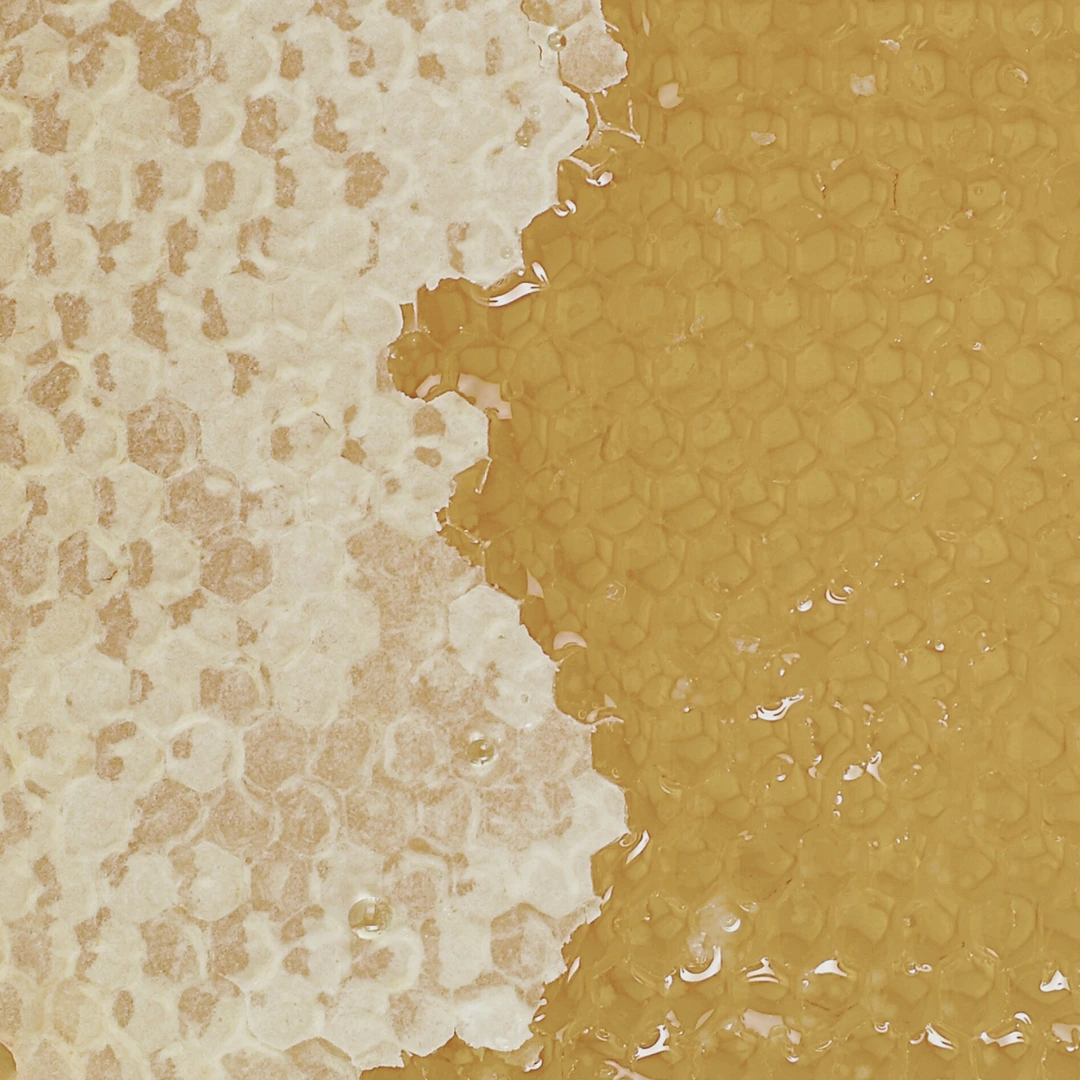
You open a jar of honey you bought a few weeks ago and find it thick, grainy, and partially solid. Your first thought is that something went wrong. Maybe it's gone bad, maybe it's fake, maybe it sat in the wrong temperature. None of those are true. Crystallized honey is perfectly fine: safe to eat, unchanged in flavor, and arguably an indicator that what you bought is the real thing. Crystallization is one of the most natural processes honey undergoes, and the fact that it surprises or concerns so many people says more about how disconnected we've become from real honey than it does about the honey itself.
The science of why honey crystallizes
Honey is a supersaturated sugar solution. It contains roughly 70% sugars (primarily glucose and fructose) dissolved in about 17-18% water. That's more sugar than the water can stably hold in solution at room temperature, which means the glucose is constantly looking for an excuse to come out of solution and form solid crystals. Given enough time, it will.
The process works like this: glucose molecules separate from the water content and begin arranging themselves into tiny crystals. Those crystals attract more glucose molecules, which attach and grow. Over time, enough glucose crystallizes out that the honey transitions from a smooth liquid to a thick, grainy semi-solid. The fructose and remaining water stay in liquid form, which is why crystallized honey is often a mix of crunchy crystals suspended in a thinner syrup rather than a uniform solid.
Temperature accelerates or slows this process significantly. The sweet spot for crystallization is around 50-59°F (10-15°C). At that range, glucose molecules move slowly enough to form organized crystals but aren't so immobilized that the process stalls. Above 77°F (25°C), crystallization slows dramatically. Below 40°F (4°C), it also slows because the honey becomes too viscous for molecules to rearrange. This is why honey stored in a cool pantry crystallizes faster than honey kept on a warm kitchen counter.
The rate of crystallization also depends on what's suspended in the honey. Pollen grains, wax particles, air bubbles, and propolis fragments all act as nucleation sites: seed points around which crystals form. Raw honey, which retains all of these microscopic particles, crystallizes significantly faster than processed honey that's been filtered clean. This is why the honey bear from the grocery store stays liquid on your shelf for a year and your jar from the farmers market turns solid in six weeks. The commercial product has been stripped of everything the crystals need to get started.
Why some honeys crystallize faster than others
Not all honey crystallizes at the same rate. The key variable is the ratio of glucose to fructose. Honeys with a higher proportion of glucose crystallize faster. Honeys with more fructose stay liquid longer.
Clover honey is one of the fastest to crystallize, often within two to four weeks after extraction. Its glucose-to-fructose ratio is high, and it's the varietal most people encounter from local beekeepers, which means it's also the varietal most likely to surprise someone who expected their jar to stay liquid. Dandelion honey crystallizes even faster, sometimes within days. Goldenrod, canola, and alfalfa honey are all fast crystallizers as well.
On the other end of the spectrum, tupelo honey is famous for resisting crystallization. Its extremely high fructose content can keep it liquid for a year or more. Acacia honey behaves similarly. Sage honey from California is another slow crystallizer. These varietals are prized partly for this property, but slow crystallization isn't a sign of higher quality: it's just chemistry. A jar of clover honey that crystallizes in two weeks is no less genuine or nutritious than a jar of tupelo that stays liquid for a year.
Wildflower honey, which is a blend of whatever the bees were foraging on, falls somewhere in between and varies batch to batch. A wildflower harvest dominated by clover will crystallize faster than one dominated by tulip poplar or black locust. This is one of the reasons your spring jar and your fall jar from the same beekeeper can behave differently in the pantry.
Crystallization as an authenticity signal
Here's the part that reframes crystallization entirely: if your honey crystallizes, it almost certainly hasn't been heavily processed.
Commercial honey sold in grocery stores is pasteurized at around 160°F and ultra-filtered to remove pollen, wax, and other particles. Both of these steps dramatically slow crystallization. The heat treatment dissolves existing glucose crystals and delays new ones from forming. The filtration removes the nucleation sites that crystals need to start growing. The result is honey that stays perfectly clear and liquid for months or even years on a shelf. It looks appealing, but that appearance comes at a cost: the enzymes, pollen, and propolis that give raw honey its character have been stripped out.
Raw honey that hasn't been heated or finely filtered will crystallize. That's not a defect. It's what real honey does. The pollen and wax particles act as natural seed points, and the unprocessed glucose goes through its normal crystallization process without anything to stop it. When you see a jar of honey turning thick and opaque, you're looking at evidence that the honey was handled minimally between the hive and the jar. More on raw vs processed honey.
This is why the widespread consumer reaction to crystallization (assuming the honey is bad, returning it, throwing it away) is so frustrating for beekeepers. The very quality that signals their product is genuine and minimally processed is the thing that makes customers distrust it. Every beekeeper who sells at farmers markets has had the conversation: "My honey went hard, is something wrong?" Nothing is wrong. Everything is working exactly as it should.
How to decrystallize honey (and when not to bother)
If you prefer your honey liquid, returning crystallized honey to its original state is simple. Place the jar in a bowl of warm water, around 100-110°F (38-43°C), roughly the temperature of a hot bath. Let it sit for 20 to 30 minutes, stirring occasionally. The warm water gently dissolves the glucose crystals without damaging the honey's enzymes or other heat-sensitive compounds. For a large jar or heavy crystallization, you might need to replace the water once or twice as it cools.
Do not microwave crystallized honey. Microwaves heat unevenly, creating hot spots that can reach temperatures well above what the honey can tolerate while leaving other areas unchanged. Those hot spots destroy enzymes and can scorch the sugars, giving the honey a cooked, caramel-off taste. If you've bought raw honey specifically for its unprocessed qualities, microwaving undoes the thing you paid for.
Do not heat the honey above about 118°F (48°C) if you want to preserve its raw character. That's roughly the natural temperature inside a beehive on a hot day, and it's the threshold above which heat-sensitive enzymes start breaking down. A warm water bath keeps you well within this range. Boiling water is too hot.
Alternatively, don't decrystallize it at all. Crystallized honey has its own appeal. The texture is thicker and more spreadable, somewhere between a coarse jam and soft butter. It holds its shape on toast or a biscuit without dripping. It dissolves more slowly in tea, which some people prefer. In much of Europe and Canada, crystallized honey is the standard form. Creamed honey, one of the more popular specialty products at farmers market honey booths, is essentially crystallized honey that's been controlled for a smooth, fine-grained texture rather than the coarser crystals that form naturally.
How to store honey to control crystallization
You can't prevent crystallization forever in raw honey, but you can slow it or speed it depending on your preference.
To slow crystallization, store honey at room temperature, ideally around 70-77°F (21-25°C). A kitchen counter or pantry shelf that stays consistently warm is the best spot. Keep the lid sealed tightly, since moisture absorption can accelerate certain changes in the honey. Avoid storing honey in the refrigerator: the cool temperature falls right in the crystallization sweet spot and will speed the process significantly.
To speed crystallization (if you want spreadable honey), store the jar in a cooler location like a basement or a cool closet where temperatures hover around 50-60°F. The honey should begin crystallizing within a week or two. You can also seed the process by stirring in a small amount of already-crystallized honey, which introduces nucleation sites and kicks off crystal formation faster and more evenly. Find raw honey from local producers near you.
Whatever you do, don't throw crystallized honey away. It hasn't expired, it hasn't spoiled, and nothing is wrong with it. Honey is one of the only foods that never truly goes bad: archaeologists have found edible honey in Egyptian tombs that's thousands of years old. Your six-month-old jar with some crystals in it is doing just fine. Warm it, spread it, or eat it with a spoon. It's still the same real honey it was the day you opened it. Find local beekeepers selling raw honey near you.