
A Beginner's Guide to Buying Honey at the Farmers Market
Buying honey at a farmers market is different from grabbing a jar off the shelf. Here's how to pick the right booth, what to ask, and what to pay.
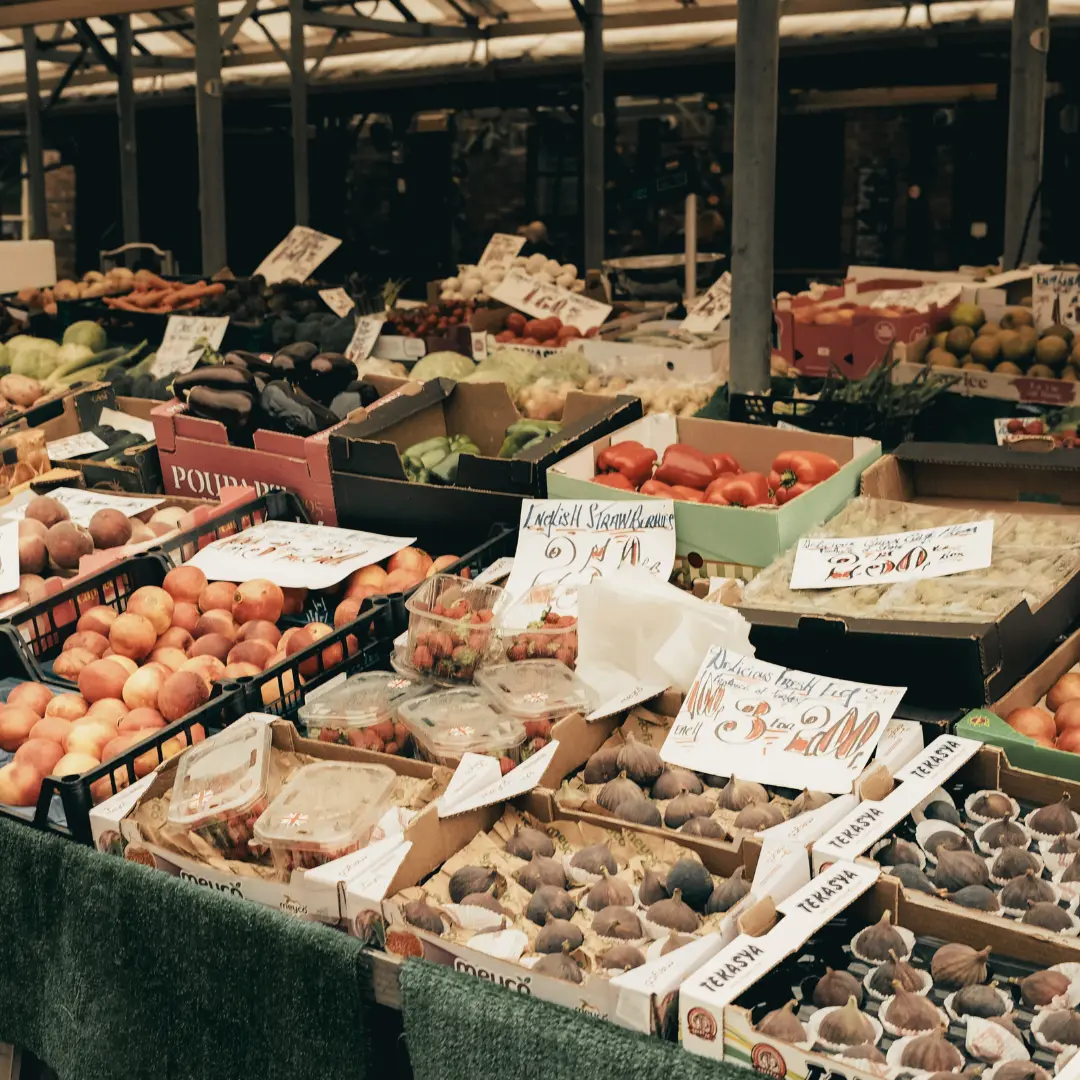
The first time you buy farmers market honey, it can feel weirdly intimidating. You're standing in front of a table covered in jars of varying sizes, colors, and labels. Some are dark amber, some are pale gold, one might be creamy and opaque. There's a person behind the table in a bee-embroidered hat who clearly knows everything about this product. Other customers seem to know exactly what they want. You don't. That's fine. Buying honey at a farmers market is simpler than it looks once you know what you're seeing, and the person selling it will be the most helpful vendor at the entire market. All you need is a few minutes and the right questions.
What you're looking at on the table
A typical honey booth at a farmers market will carry several products, and understanding what's there helps you make a confident choice.
The main event is liquid honey in jars. Most local beekeepers will offer at least two options: a lighter honey and a darker one. The lighter jar is usually from an earlier harvest (spring or early summer) when the bees were working milder blooms: clover, wildflowers, fruit tree blossoms. The darker jar is typically from a later harvest (mid to late summer) when the bees transitioned to more intense nectar sources like goldenrod, buckwheat, or tulip poplar. Lighter honeys tend to be milder and sweeter. Darker honeys are bolder, more complex, and sometimes have a faintly bitter or malty edge. Neither is better: they're different, and which you prefer is personal.
Some booths will also carry comb honey: sections of the actual wax honeycomb with honey still sealed inside the cells. This is often the first thing to sell out. You eat the wax and all, and the flavor is more intense than extracted liquid honey because nothing has been exposed to air. If you've never tried it, a small section is worth buying alongside a jar of liquid. More about what honeycomb is and how to eat it.
You might also see creamed honey (a thick, spreadable consistency achieved through controlled crystallization), infused honeys (with flavors like cinnamon, hot pepper, or lavender mixed in), honey sticks, and hive products like beeswax candles, lip balm, pollen, and propolis tinctures. The variety signals an experienced producer who's working their hives fully.
Jar sizes at markets typically follow a pattern: half-pint jars (about 12 ounces) run $5 to $8, pint jars (roughly 1.5 pounds) run $10 to $15, and quart jars (about 3 pounds) run $18 to $30. The beekeeper may also offer bulk options for people who go through honey fast or want to stock up for the season.
How to sample and what to taste for
Most honey vendors at farmers markets will let you taste before you buy. Some have a tray of toothpicks or small wooden tasting sticks set out next to open jars. Others will offer samples if you ask. Don't be shy about this: tasting is expected, and the beekeeper wants you to try their product.
When you taste, pay attention to more than sweetness. Good honey has a distinct finish: a floral note, a mineral quality, a faint bitterness, a brightness on the back of your tongue that lingers after you swallow. Compare the lighter and darker options side by side if you can. The gap is usually dramatic. That pale spring honey might taste clean and almost buttery. The dark late-summer honey might have a richness that reminds you of caramel or brown sugar with a slightly tannic edge. Both came from the same hives, just different months.
If the beekeeper has varietal honeys (sourwood, orange blossom, buckwheat, tupelo, basswood) tasting them side by side is one of the best ways to understand how profoundly floral source shapes honey. A taste of buckwheat next to a taste of clover will rewrite your assumptions about what honey can be. A guide to American honey varietals.
The other thing to notice is texture. Fresh honey that was recently harvested tends to be slightly thinner and more fluid than honey that's been sitting for a few months. Older raw honey may have started crystallizing, giving it a thicker, grainier consistency. Both are normal. Crystallization is a sign of raw, minimally processed honey, and some customers specifically prefer it for spreading. If you see a jar that's partially crystallized, that's not a reason to skip it: it's a reason to trust it.
Questions that tell you whether this is a real beekeeper
Not everyone selling honey at a farmers market produced it themselves. Some vendors are resellers who buy honey in bulk from a supplier, repackage it, and sell it under their own label. This isn't illegal, and some markets allow it as long as the vendor discloses it. But if you're at the market specifically to buy from a local beekeeper, you want to make sure you're talking to someone who actually manages hives.
The simplest question is the most effective: where are your hives? A beekeeper will answer immediately and specifically. "I've got 12 hives on my property in Cedar Falls and another 8 at a friend's farm in Waverly." A reseller will give you something vague: "our honey comes from local sources" or "we partner with beekeepers in the region." The specificity of the answer tells you everything.
Follow up with: when was this honey harvested? A beekeeper knows this down to the month. "This batch is from the July pull" or "this was our spring extraction, late May." Honey is seasonal, and someone who produced it tracks the timeline precisely. A reseller selling the same product year-round without seasonal distinctions is working from a bulk supply.
If you want to go deeper, ask about their bees. How many colonies do they manage? How were their losses last winter? What are the bees working right now? These are the questions that make a beekeeper light up. They'll tell you about the hive that swarmed in April, the frame of sourwood honey that came in so light it was almost white, the colony that's building up faster than any they've had in five years. You can't fake this kind of specific, lived experience.
Why farmers market honey costs more (and why that's the real price)
A pint of honey at the farmers market costs roughly twice what the same volume costs at a grocery store. Local raw honey at farmers markets typically runs $10 to $20 per pound, depending on region, varietal, and the individual producer.
The instinct is to think the beekeeper is charging a premium. The reality is the opposite: the grocery store honey is artificially cheap. Imported honey enters the US at $0.84 to $1.55 per pound. At those prices, it's virtually certain the product has been blended, heavily processed, and possibly adulterated, because producing genuine, unadulterated honey at that price point isn't economically viable anywhere in the world.
The farmers market price reflects the real cost of keeping bees, managing hives through winter losses, extracting honey by hand, bottling in small batches, and driving to a market at 5 AM on a Saturday to sell 40 jars. A hobbyist beekeeper with 10 hives might produce 300 to 600 pounds of surplus honey in a good year. That's their entire annual output, and it doesn't account for the seasons when drought, disease, or colony collapse cuts the harvest in half.
When you pay $14 for a pint of raw wildflower honey from a local beekeeper, you're paying the actual cost of honey produced by someone who depends on the health of their colonies and the quality of their product for their livelihood. The $5 grocery store bear is the anomaly, not the market jar.
Building a relationship with your market beekeeper
The best reason to buy honey at a farmers market isn't the honey itself: it's the person selling it. A beekeeper you buy from regularly becomes a resource. They'll tell you when a specific varietal is coming in, set aside a jar of comb honey before it sells out, let you know when they're doing a bulk discount at the end of the season, and answer any question you have about honey storage, crystallization, or what to pair with what.
Most local beekeepers at markets have a core group of regulars who show up every week or two and buy the same thing. Becoming one of those regulars gets you access to the good stuff: the limited-run varietal that doesn't make it to the table because it's already spoken for, the first batch of spring honey before it hits the booth, the experimental infused honey they're testing before committing to a full run. Find local beekeepers near you.
The transition from first-time buyer to regular usually happens fast. You buy a jar, you taste the difference, you come back for more the next week. Within a month, you've got a beekeeper you trust and a preferred varietal you look forward to each season. Within a year, you've got a pantry full of seasonal honeys and a standing relationship with a producer who knows your name. That's how farmers market honey works: the product brings you in, and the person behind the table keeps you coming back.
Frequently Asked Questions
- How do I know if a farmers market honey vendor is a real beekeeper?
- Ask where their hives are located. A beekeeper will answer immediately and specifically with a town and hive count. Ask when the honey was harvested. A beekeeper knows this to the month. Vague answers about local sources or regional partners usually indicate a reseller.
- How much should I pay for honey at a farmers market?
- Farmers market honey typically runs $10 to $20 per pound depending on region and varietal. This is the real cost of small-batch production. The lower price on grocery store honey reflects imported, blended, and heavily processed product, not a discount on equivalent quality.
- Can I sample honey before buying at a farmers market?
- Usually yes. Most honey vendors have tasting sticks available or will offer a sample if you ask. Try the lightest and darkest option side by side to understand how dramatically flavor varies across harvests and varietals.
- What is creamed honey?
- Creamed honey is liquid honey that has been processed through controlled crystallization to produce a thick, spreadable consistency. It has the same flavor and nutritional profile as liquid honey but a smooth, fudge-like texture that many people prefer for spreading on bread or toast.
- Why does farmers market honey vary so much in color?
- Color reflects the nectar source. Lighter honeys come from mild blooms like clover and wildflowers in early spring. Darker honeys come from late-season plants like goldenrod, buckwheat, or tulip poplar. A table with multiple colors shows a beekeeper who harvests separately across the season.