How to Start Buying Local Honey and Never Go Back to Store-Bought
Switching to local honey changes how honey tastes, how you buy it, and who you support. Here's how to find the best local honey near you.
Most people who switch to local honey say the same thing after the first jar: they're never going back to store-bought. It's not marketing language. It's the actual phrase that shows up again and again in reviews and farmers market conversations. Someone buys a jar from a local beekeeper, tastes it on toast the next morning, and suddenly the squeeze bottle from the supermarket tastes flat and anonymous.
The difference isn't subtle. Local honey reflects real nectar sources (clover, wildflower, orange blossom, buckwheat) and those plants change the color, aroma, and flavor in ways mass-market honey rarely does. Starting to buy local honey isn't complicated, but there's a small learning curve, and knowing what to look for makes the experience much better from the beginning.
What changes the moment you try real local honey
The first noticeable difference with local honey is flavor intensity. Most supermarket honey is blended from many sources and filtered to remove nearly everything except the sugars. It's designed to taste consistent year-round. That consistency also strips away most of the character.
Local honey tastes like a specific landscape. Spring wildflower honey might be pale gold with a light floral aroma. Summer clover honey tends to be soft and sweet with mild vanilla notes. Buckwheat honey is almost black and smells faintly like molasses and malt. The first time someone tastes buckwheat honey, they usually pause. It's that different.
Texture is another giveaway. Raw local honey often crystallizes over time. Instead of staying perfectly liquid for years, it thickens, becoming spoonable or even spreadable depending on the glucose content. That crystallization is completely natural and actually a good sign the honey hasn't been heavily processed.
Color varies wildly too. Jars can range from nearly clear to deep amber to dark brown. In a farmers market booth, you'll often see a row of jars that look like a gradient of sunlight. Those differences are exactly why people start seeking out local honey once they've tried it.
Where to buy local honey for the first time
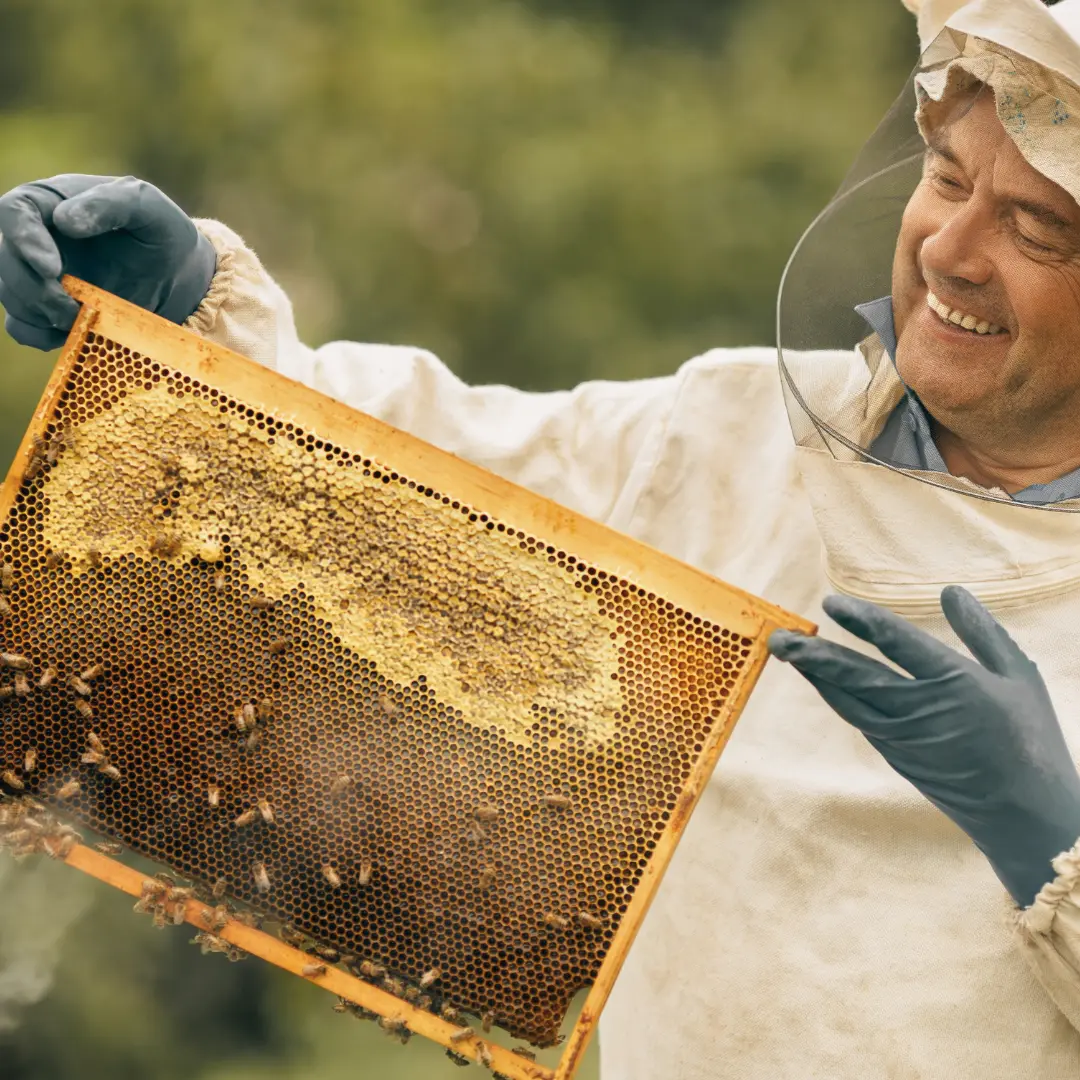
The easiest place to start buying local honey is a farmers market. Beekeepers love talking about their honey, and a market booth gives you the chance to ask questions you'd never get answered in a grocery store aisle. You can ask where the bees forage, when the honey was harvested, or what the darker jar in the corner tastes like. Many sellers offer small tasting sticks. One taste usually tells you more than any label could.
Roadside farm stands are another great option, especially in rural areas. Honey often sits next to eggs, vegetables, and homemade jam in small honor-system stands. The jars might not look fancy, but the honey inside is often excellent. Specialty food shops sometimes carry locally sourced honey as well, especially in regions with active beekeeping communities.
Knowing where to buy local honey becomes easier after the first few purchases. Most people quickly develop a favorite beekeeper and return to them season after season. Browse local honey sellers in your area.
How to tell if honey is truly local
The word "local" gets used loosely on food labels, including honey. A jar in a grocery store might say "local honey" even if the honey was blended from several states away. The only reliable way to confirm true local honey is knowing the producer. Farmers markets solve this problem naturally because you're usually buying directly from the beekeeper or their family.
Location matters most. A real local jar usually lists a specific town or county rather than a vague region. You might see something like "Wildflower Honey, Greene County, Missouri." Harvest dates are another good sign. Many small producers label honey by season or year because each harvest tastes slightly different.
You can also ask simple questions. Where are the hives located? What flowers were blooming during the harvest? Beekeepers answer these questions easily because they actually know the answers. That direct connection is one of the reasons people gravitate toward locally sourced honey. You're not just buying a sweetener. You're buying a product tied to a specific place and season. What honey label terms actually mean.
Building a simple local honey routine
Buying local honey becomes a habit surprisingly fast. Most people start with a single jar from a market. A week later they're back for another, sometimes a different variety just to compare. Eventually a routine forms: you visit the same beekeeper every few weeks. Maybe you keep a jar of light spring honey for tea and a darker fall honey for baking. Some households keep multiple jars open at once depending on how they're using it.
Honey lasts indefinitely, so stocking up during harvest season is common. Many regular buyers also experiment with different formats. Liquid honey is the classic version, but creamed honey (a thick, spreadable form made through controlled crystallization) becomes a favorite for toast and biscuits. Flavored creamed honeys often show up at this stage too. Cinnamon creamed honey in particular has converted a huge number of first-time buyers.
Once that routine develops, supermarket honey tends to disappear from the pantry.
Why so many families are switching to local honey
The shift toward local honey reflects a broader change in how people shop for food. According to a 2024 National Honey Board consumer study, roughly one in six US shoppers now falls into a category researchers call "natural nourishers." These shoppers prioritize minimally processed foods and are willing to seek out local sources. Many of them are families with children at home, and they tend to pay attention to ingredient quality and sourcing.
Honey fits neatly into that mindset. It's simple, recognizable, and produced close to home in many regions. There's also an emotional component. Buying honey from a beekeeper you've met creates a different relationship with the food. You remember the conversation about where the bees forage or how the harvest went that year.
Word of mouth spreads quickly in this space too. A neighbor recommends a beekeeper. Someone brings a jar as a gift. A coworker mentions the honey they bought at a market last weekend. That's usually how the discovery pipeline works: farmers market, first jar, repeat purchase, telling other people about it.
Finding the best local honey near you
Once you decide to buy locally, the next question becomes practical: where exactly do you find the best local honey near you? Start close to home. Farmers markets within a short drive often host at least one beekeeper during the warmer months. In agricultural regions you may find several.
Local food groups and community boards sometimes share recommendations as well. Beekeepers tend to develop loyal followings, and customers are happy to point new buyers in the right direction. Once you locate a nearby producer, the best move is simple: buy a small jar and taste it. That first jar tends to answer the question immediately. Find local beekeepers offering raw honey near you.
What happens after your first jar
Local honey has a way of changing how people think about honey entirely. Instead of a single generic ingredient, it becomes seasonal and varied. One jar might be pale and delicate. Another might be dark and intense. Both came from bees, but they reflect different flowers and different moments in the year.
People start noticing those nuances. They compare jars. They ask questions. They look forward to the next harvest. Before long, buying honey becomes part of the same rhythm as buying good bread or fresh fruit at the market.
If you want to start that shift yourself, the easiest step is simply finding a nearby beekeeper and tasting what they produce. Browse local honey sellers near you. One jar is usually enough to understand why so many people say the same thing afterward. They're never going back to store-bought.