The Best Bee Products Beyond Honey: Pollen, Propolis, Beeswax, and More
Local beekeepers sell more than honey. Here's what bee pollen, propolis, beeswax, and royal jelly are, how they're harvested, and which are worth trying.
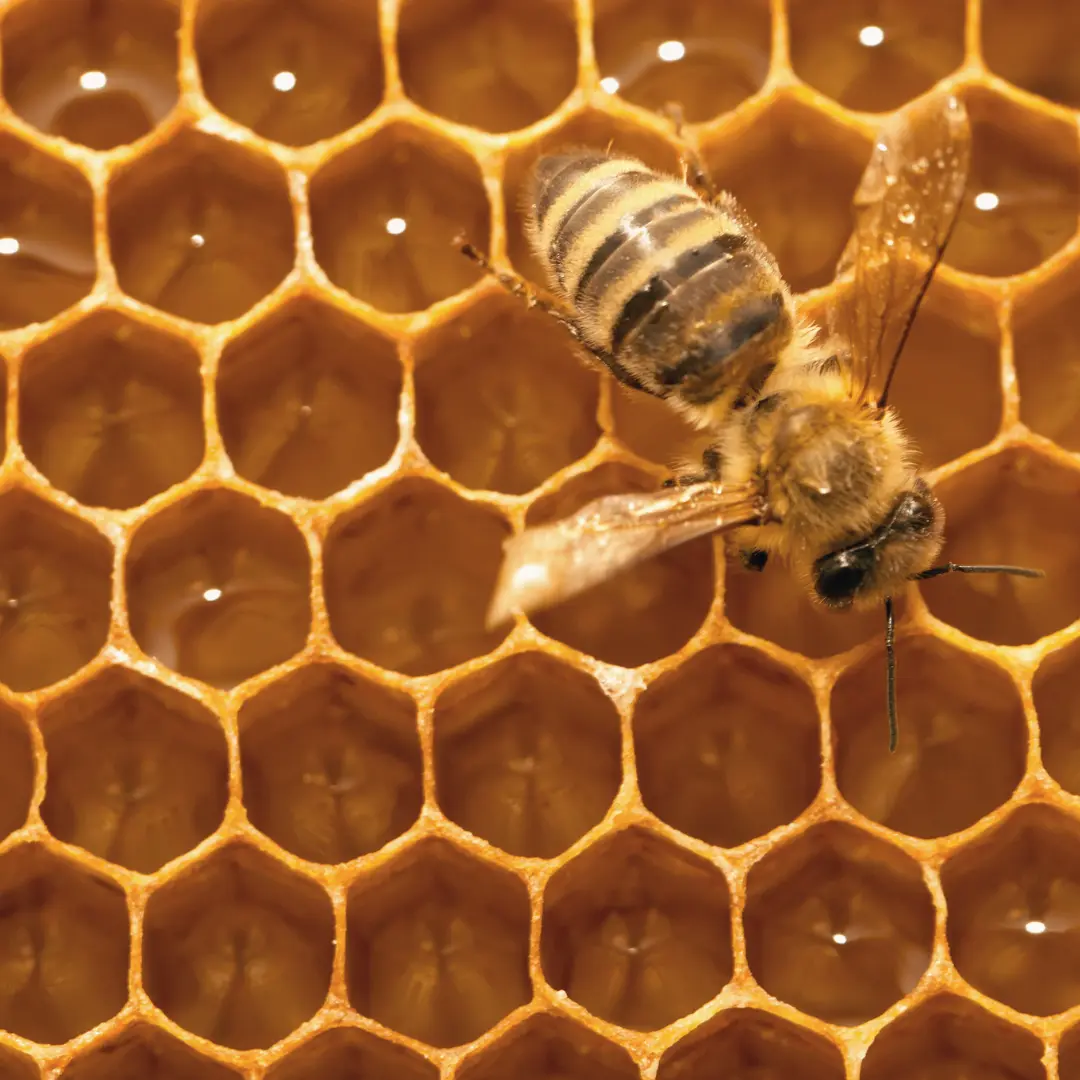
A honey bee colony produces far more than honey. The same hive that fills your jar also produces beeswax, pollen, propolis, and royal jelly: each with its own harvesting process, its own uses, and its own market. Most people who buy local honey have walked past these other bee products at a farmers market booth without giving them much thought. That's understandable: a jar of honey is familiar. A bag of bee pollen granules or a bottle of propolis tincture requires more explanation. But these hive products are worth knowing about, both because some of them are genuinely useful and because a producer who carries a full range of bee products is almost always a serious, knowledgeable beekeeper.
Bee pollen: what it is and what it isn't
Bee pollen is exactly what it sounds like: pollen that bees collected from flowers and packed into granules for transport back to the hive. Forager bees gather pollen in specialized baskets on their hind legs (called corbiculae), mixing it with a small amount of nectar and enzymes to hold it together. The result is those colorful little pellets you see in jars at the honey booth: typically gold, orange, and brown, with occasional purples and greens depending on the floral source.
Pollen is the bees' primary protein source. It's rich in amino acids, vitamins (particularly B vitamins), minerals, fatty acids, and enzymes. The exact nutritional profile varies depending on the plant species the pollen came from, which is why the granules in a single jar are often multiple colors: each color represents a different flower.
Beekeepers harvest pollen by placing a pollen trap at the hive entrance. The trap has a screen with holes just large enough for the bee to squeeze through, which knocks some of the pollen granules off her legs into a collection tray below. A well-managed trap takes only about 10-30% of the incoming pollen, leaving the colony with plenty for brood rearing. Taking too much weakens the hive, so ethical beekeepers rotate their traps rather than running them continuously.
People take bee pollen as a dietary supplement, typically by the spoonful or sprinkled on yogurt, smoothies, or oatmeal. The health claims around bee pollen are extensive (immune support, energy, athletic performance, anti-inflammatory effects) and the evidence is mixed. Some studies show anti-inflammatory and antioxidant activity. Others are small or inconclusive. What's not debatable is the nutritional density: bee pollen is one of the more nutrient-rich natural foods available.
One critical caution: anyone with a pollen allergy or a history of allergic reactions to bee stings should approach bee pollen carefully. Severe allergic reactions, including anaphylaxis, have been documented. Start with a tiny amount (a single granule) if you've never consumed it before and have any allergy history. More about local honey and the allergy connection.
Propolis: the hive's immune system
Propolis is a sticky, resinous substance that bees make by collecting sap and resin from tree buds and bark, then mixing it with beeswax and enzymes. Inside the hive, propolis serves as a sealant, a structural adhesive, and most importantly, an antimicrobial barrier. Bees coat the interior surfaces of the hive with propolis to create a sterile environment. They use it to seal cracks, reduce entrances, and even embalm intruders (like mice) that are too large to remove. The word itself comes from Greek: pro (before) and polis (city), the defense before the city.
The antimicrobial properties of propolis are well documented. Research has identified over 300 bioactive compounds in propolis, including flavonoids, phenolic acids, and terpenes that show antibacterial, antifungal, and antiviral activity. Propolis extracts have been studied for wound healing, oral health, sore throat relief, and immune modulation. It's one of the more scientifically credible hive products in terms of demonstrated biological activity.
Beekeepers harvest propolis by placing a propolis trap (a flexible screen with small gaps) in the hive. The bees instinctively fill the gaps with propolis, and the beekeeper removes the screen, freezes it (which makes the propolis brittle), and cracks the propolis off. The yield is small: a few ounces per hive per year, which is why propolis products tend to be expensive relative to their size.
You'll find propolis sold as tinctures (dissolved in alcohol or glycerin), throat sprays, lozenges, and in raw chunk form. The flavor is intense: resinous, slightly bitter, with a piney warmth that's distinctive and polarizing. People who use propolis regularly tend to reach for the throat spray at the first sign of a cold, and anecdotally, many swear by it.
Beeswax: candles, skincare, and a hundred other uses
Beeswax is produced by worker bees from glands on the underside of their abdomens. They secrete tiny wax scales, chew them to soften the wax, and mold it into the hexagonal comb structure that holds honey and brood. Bees consume roughly six to eight pounds of honey to produce one pound of beeswax, which is one of the reasons comb honey is more expensive than extracted liquid honey: the wax represents a significant resource investment by the colony.
When a beekeeper extracts honey, the cappings (the wax seals removed from each cell) become the primary beeswax harvest. Additional wax comes from old comb that's rotated out of the hive. The beekeeper melts and filters this raw wax to remove impurities, then pours it into blocks or molds. The resulting beeswax is golden yellow, smells faintly of honey, and has an extraordinary range of uses.
Beeswax candles are the most popular beeswax product. They burn cleaner than paraffin candles (no petroleum-derived soot, no synthetic fragrances) and emit a warm, subtle honey scent as they burn. They also burn more slowly than paraffin, giving them a longer burn time per ounce. The color ranges from pale yellow to deep gold depending on the age and source of the wax.
Beyond candles, beeswax is used in lip balms, hand creams, body butters, soaps, and other skincare products. It's a natural emollient and barrier: it sits on the skin surface, holds moisture in, and doesn't clog pores. Many local beekeepers produce their own skincare lines using beeswax from their hives combined with honey, propolis, and other natural ingredients. A lip balm from a beekeeper who made it with wax and honey from their own hives is a completely different product from a mass-market lip balm that happens to contain some beeswax.
Beeswax also has practical household uses: as a wood polish, a leather conditioner, a sewing thread wax, and a base for food wraps (beeswax wraps are a reusable alternative to plastic cling film). A block of pure local beeswax is one of the more versatile things you can buy at a honey booth. Find producers selling beeswax candles and products near you.
Royal jelly: rare, expensive, and genuinely unusual
Royal jelly is a thick, milky-white secretion produced by nurse bees from glands in their heads. It's the exclusive food of the queen bee throughout her entire life, and it's fed to all larvae during their first three days of development. After day three, worker and drone larvae switch to a diet of pollen and honey, while the queen larva continues eating royal jelly. This dietary difference is what determines whether a larva develops into a worker or a queen: a fact that's fascinated biologists for decades.
Harvesting royal jelly is labor-intensive and yields are tiny: a few grams per collection from specially prepared queen cells. This makes royal jelly the most expensive hive product by a wide margin. It's sold fresh (refrigerated), freeze-dried, or mixed into honey. The flavor is sour, slightly astringent, and nothing like honey: most people who try it raw are surprised by how unpleasant it tastes.
Health claims around royal jelly include fertility support, anti-aging, cholesterol reduction, and immune enhancement. Some of these have preliminary scientific support. Royal jelly contains a unique fatty acid called 10-HDA (10-hydroxy-2-decenoic acid) that has shown anti-inflammatory and antimicrobial activity in lab studies. But the clinical evidence in humans is limited, and the high cost makes it impractical as a daily supplement for most people.
Not many local beekeepers produce royal jelly because the harvesting process requires manipulating colonies in ways that most small operations find impractical. If you encounter it, it's usually at larger apiaries or from producers who specialize in queen rearing.
What a diverse product range signals about a producer
When you're at a farmers market and you see a honey booth with just a few jars of liquid honey, that's a beekeeper. When you see a booth with liquid honey, comb honey, creamed honey, pollen, propolis tinctures, beeswax candles, lip balm, and maybe a few infused varieties, that's a beekeeper who has been doing this for a while and knows their hives thoroughly.
A diverse product range requires a producer to understand multiple harvesting and processing techniques. Pollen trapping, propolis collection, wax rendering, tincture making, and skincare formulation are all distinct skills. A beekeeper who does all of them is running a serious operation and investing real time in maximizing what the hive produces. That's not a guarantee of quality, but it's a strong indicator. How to evaluate a honey seller at the farmers market.
This is also worth considering for gifts. A gift basket assembled from a single local beekeeper (a jar of raw honey, a section of comb, a beeswax candle, a lip balm, maybe a propolis spray) tells a story that a random box from a department store doesn't. Everything in the basket came from the same hives, produced by the same bees, managed by the same person. That kind of provenance makes a gift feel considered and specific in a way that's hard to replicate with mass-market products. Browse local beekeepers in your state.