
How Beekeeping Builds Community
An overview of how beekeeping brings people together and why local honey is so much more than just a sweet product.
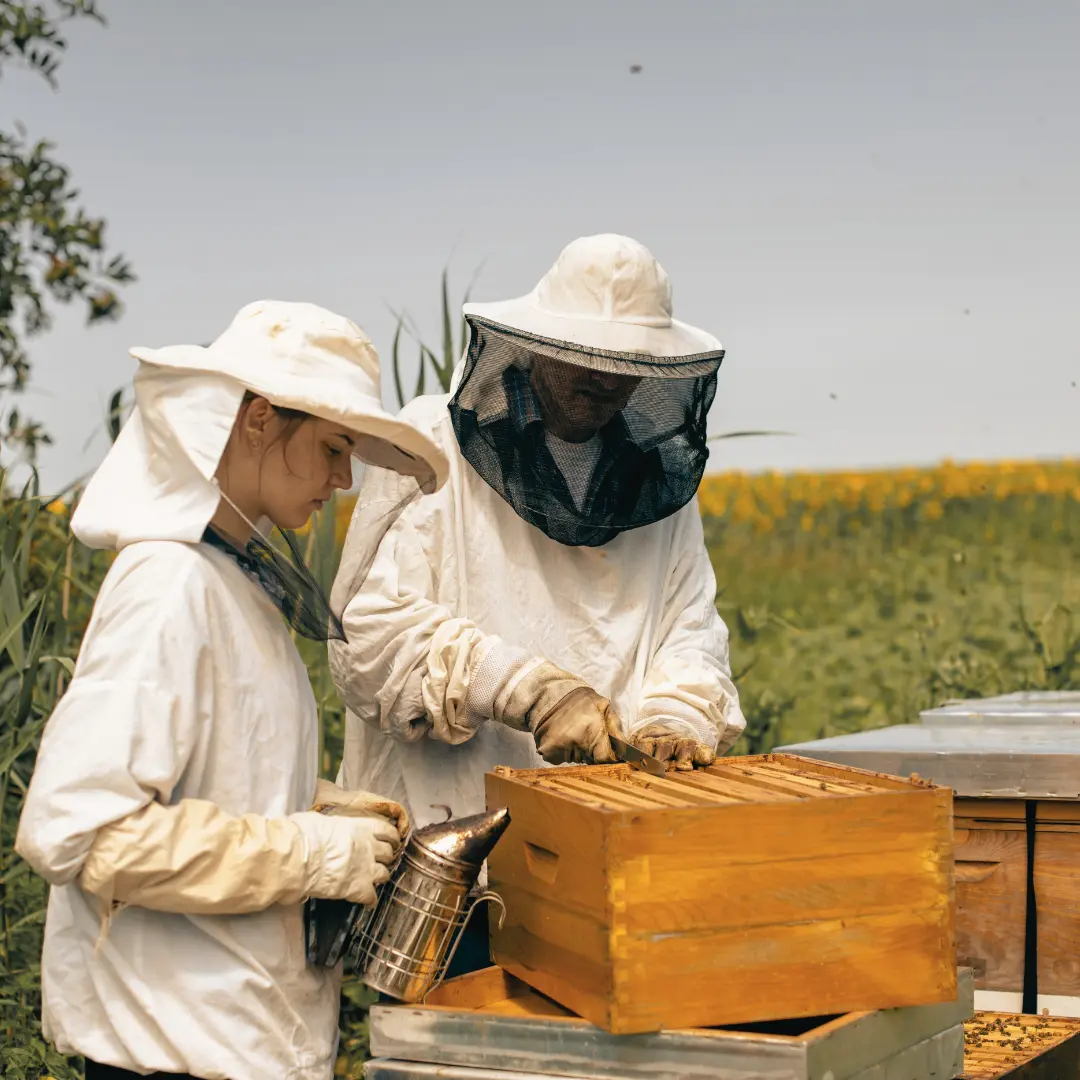
Ask almost any beekeeper how they got started and you'll hear a similar story. Someone they knew kept bees. A neighbor with a few hives let them help with an inspection. A club meeting they attended out of curiosity led to a first package of bees the following spring. Beekeeping rarely starts in isolation. It passes from person to person, hand to hand, and the networks it creates tend to hold together long after the original introduction.
That social dimension is one of the things that distinguishes beekeeping from most hobbies. The bees themselves demand it. A new beekeeper who tries to learn entirely from books and YouTube videos will make mistakes that an experienced mentor would spot immediately. The knowledge required to keep a colony alive through winter, to recognize the early signs of disease, to judge when a hive is queenright or building toward a swarm: these things are hard to convey without standing next to a hive and watching together.
Beekeeping clubs and what they actually do
Local beekeeping associations exist in almost every county and region of the United States. Many have been operating for decades. They typically meet monthly and organize around education, mentorship, and mutual support in ways that are genuinely useful rather than merely social.
The most valuable function is mentorship. Most clubs match newcomers with experienced beekeepers who will visit their hives during the first season, answer questions as they come up, and help diagnose problems before they become losses. This kind of direct, hands-on guidance reduces first-year colony mortality significantly. Beekeeping is a skill that develops through direct observation, and a mentor who can say "look at this frame, see how the brood pattern is patchy here" teaches more in five minutes than an hour of reading.
Clubs also pool equipment. Extractors, uncapping tanks, and queen-rearing supplies are expensive to buy and infrequently needed. Many clubs maintain a lending library of equipment that members can borrow during extraction season. For a hobbyist with two or three hives, access to a commercial extractor through the club makes small-scale honey production economically practical in a way it wouldn't otherwise be.
Group purchasing of supplies, bulk orders of package bees or nucleus colonies in spring, and swarm call networks (where beekeepers take turns responding to calls from the public about swarms on their property) are other functions that clubs organize effectively and individuals can't replicate alone.
Farmers markets as community infrastructure
The farmers market is where beekeeping's community dimension becomes visible to people who don't keep bees. A beekeeper who shows up at the same market every week builds relationships with customers that no grocery store interaction can replicate. They know who's allergic to what, who prefers a lighter spring honey, whose kids love the comb sections, and who comes back every year for the buckwheat batch.
These relationships matter. They sustain small operations through difficult years when colony losses or a poor nectar season reduce production. A regular customer who trusts a beekeeper will wait for next season's honey rather than switching to a cheaper alternative. That loyalty is built over years of honest transactions and genuine conversation, not marketing.
The market also creates unexpected connections. A customer who becomes curious about where honey comes from asks questions that lead to a farm visit, which leads to becoming a volunteer during extraction season, which sometimes leads to starting their own hives. The path from honey consumer to beekeeper is often traced through a single sustained conversation at a market booth. Find local beekeepers in your area.
The broader ripple of local beekeeping
Local beekeepers are often the most visible advocates for pollinator-friendly land management in their communities. They're the people asking the city council about pesticide policies, working with schools to install demonstration hives, talking to neighboring farmers about timing spray applications to avoid harming foraging bees. Their self-interest aligns with broader environmental benefit in ways that make them unusually effective advocates.
Urban beekeeping, in particular, has demonstrated that bees can thrive in environments that most people assume are unsuitable. Rooftop hives in dense city centers often produce excellent honey because urban landscapes, with their mix of garden plants, street trees, and parks, provide more diverse forage than monoculture farmland. Cities that have embraced urban beekeeping have found that it creates community around previously neglected rooftops and vacant lots, generating interest in urban agriculture more broadly.
Every jar of honey sold at a local market represents a connection: between a beekeeper and the land they work, between the land and the flowers the bees visit, between the bees and the crops they pollinate, and between the beekeeper and the community that buys their product. That chain of relationships is what makes local honey different from a jar of blended imported sweetener, and it's what makes beekeeping a community activity rather than just a hobby.
Frequently Asked Questions
- How does beekeeping build community?
- Beekeeping brings people together through local clubs, mentorship between experienced and new beekeepers, farmers market relationships, and shared interest in local food systems. Many beekeepers say the community around the hive is as rewarding as the honey it produces.
- Are there beekeeping clubs I can join?
- Yes. Most counties and regions have beekeeping associations that meet regularly, share equipment, organize swarm calls, and mentor new beekeepers. A quick search for your county name and beekeeping association will usually turn up an active group.
- How does buying local honey support the community?
- Buying directly from a local beekeeper keeps money within the community, sustains the operation that pollinates local crops, and creates a relationship between producer and consumer that larger supply chains cannot replicate. Each jar purchased helps a local producer maintain their hives.
- Can beekeeping be a social activity?
- Absolutely. Many beekeepers keep their hives specifically for the social connections they create: sharing honey with neighbors, hosting hive tours, participating in local markets, and connecting with a community of people who share an interest in bees, local food, and sustainability.
- What is the connection between local honey and local agriculture?
- Honey bees are essential pollinators for many food crops including apples, berries, squash, and almonds. Local beekeepers who sell honey often also provide pollination services to nearby farms. Supporting local honey producers strengthens the entire local food ecosystem.