How to Find Local Honey Near You (And Why It's Worth the Effort)
Local honey isn't always easy to track down. Here's where to find it, what to ask before you buy, and why it's worth going beyond the grocery store.
Americans consume roughly 689 million pounds of honey every year, according to the most recent USDA data. The country produces only about 20% of that domestically. The rest is imported - from Argentina, India, Vietnam, Brazil, and a handful of other countries - and funneled into the uniform plastic bears and squeeze bottles that line every grocery store shelf. If you've ever searched for local honey and come up empty, that imbalance is the reason. Local honey exists, and there's more of it than you might think, but it doesn't move through the same supply chain as the commercial stuff. Finding it requires knowing where to look.
Why local honey doesn't show up where you expect it
Walk into a typical grocery store and you'll find a honey section. Most of what's there is nationally distributed, commercially processed, and blended from multiple origins. A few stores stock a token "local" option, but it's often a regional brand operating at scale rather than a small producer.
The reason is structural. Local beekeepers produce honey in small batches - a typical hobby or sideline beekeeper manages somewhere between 1 and 30 hives, each yielding maybe 30 to 60 pounds of surplus honey per year in a good season. That's not enough to supply a grocery chain. It's barely enough to supply a farmers market booth for the season, which is why local honey sellers frequently run out between harvests and why many don't even try to get into retail stores.
There's also a labeling and compliance factor. Each state has different cottage food laws governing how honey can be sold, what facilities are required, and what labels must say. For a small beekeeper, navigating retail distribution is a headache that isn't worth the margin. Selling direct - at markets, from a farm stand, through their own website, or by word of mouth - is simpler, more profitable per jar, and puts them in direct contact with their customers. That's why finding local honey usually means meeting it on its own terms rather than expecting it to show up in aisle seven.
Farmers markets are still the best starting point
If you're trying to find local honey and don't know where to begin, go to a farmers market. It's the single most common place Americans discover local honey for the first time, and there's a good reason for that beyond proximity.
At a farmers market, you can talk to the person who actually produced the honey. You can ask where the hives are. You can ask whether it's raw. You can usually taste before you buy. That interaction matters more than any label, because it gives you information that packaging never will - how the beekeeper manages their operation, what the bees are foraging on, whether the honey has been heated or filtered, and how long ago it was harvested.
Most markets run spring through fall, with peak season in late summer when the year's main harvest comes in. Some beekeepers attend year-round at indoor winter markets, but availability is spottier. If you find a producer you like, ask about buying in bulk or placing a standing order for the season - many beekeepers appreciate committed customers and will set jars aside for you.
One practical tip: don't just look for the booth with a honey sign. Plenty of farms that sell vegetables, flowers, or preserves also keep bees and sell honey as a side product. Ask around. Some of the best local honey at a market comes from a grower who doesn't even list it on their sign because they sell out within the first hour.
Farm stands, apiaries, and the roadside jar
Beyond farmers markets, the most direct way to buy local honey is to go where it's produced. Many beekeepers sell from their property - sometimes through a formal farm stand with posted hours, sometimes through an honor-system table at the end of their driveway with a cash box and a handwritten sign. In rural areas across the South and Midwest especially, these roadside honey stands are genuinely common. You just have to be paying attention while you drive.
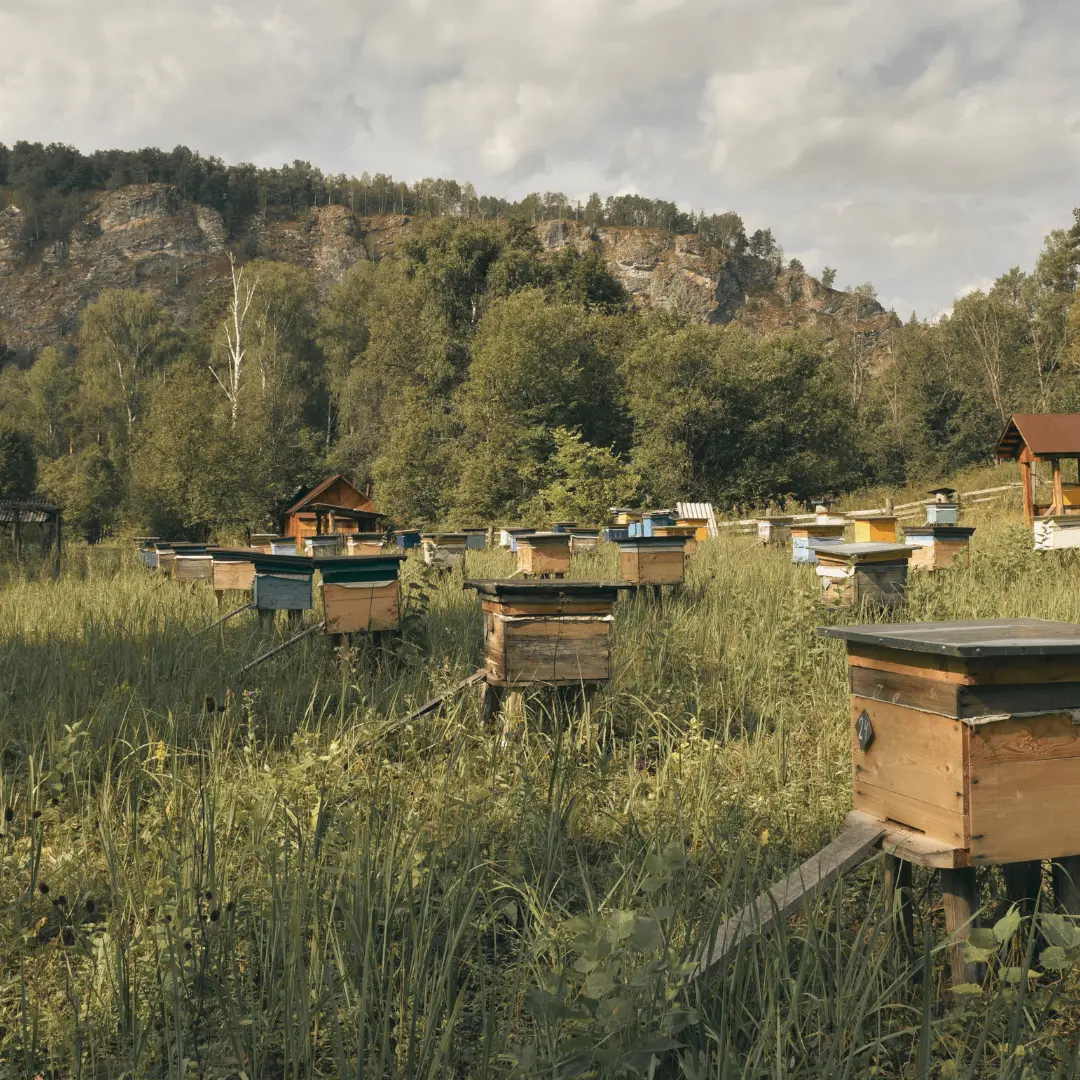
Apiaries and honey farms that welcome visitors offer an even richer experience. You can see the hives, watch an extraction demonstration, taste multiple varietals side by side, and leave with a jar that you watched come out of the centrifuge. Not every beekeeper does this - managing visitors takes time away from managing bees - but the ones who do tend to have loyal, repeat customers who make the trip seasonally.
If you're in a more suburban or urban area, check with local beekeeping associations. Nearly every state has one, and most county-level associations maintain a list of members who sell honey. State agricultural departments sometimes maintain similar directories. These are under-used resources that can connect you directly with beekeepers within a short drive of where you live.
Online directories and local honey finders
The internet has made finding local honey considerably easier than it was a decade ago, though the options are still scattered. Several online directories exist specifically to connect buyers with local producers - the National Honey Board runs a honey locator at honey.com, LocalHoneyFinder.org covers all 50 states organized by county, and state beekeeping association websites often maintain their own locators. You can also browse local honey producers by state right here.
The advantage of using a dedicated directory over a generic Google search is specificity. Searching "local honey near me" on Google gives you a mix of grocery stores, national brands with "local" in the name, Yelp results for restaurants, and maybe one or two actual beekeepers. A purpose-built directory filters out the noise and shows you sellers whose primary business is producing real local honey, often with details about their operation that a Google listing won't provide - whether the honey is raw, what varietals they carry, whether you can visit, and what other customers have experienced.
Social media has also become a meaningful discovery channel, particularly Instagram and Facebook. Many small beekeepers don't have websites at all but maintain active social media accounts where they post harvest updates, announce market schedules, and take direct orders. Searching for beekeepers or local honey plus your city name on Instagram often turns up producers who aren't listed anywhere else.
What to ask before you buy
Not all local honey is created equal, and not every person selling honey at a market is a beekeeper. Some are resellers who buy bulk honey - sometimes domestic, sometimes imported - repackage it, and sell it as "local." This isn't the norm, but it happens enough that knowing what to ask is worth your time.
Start with the basics. Where are your hives located? A beekeeper will answer this immediately and specifically - a town, a neighborhood, a particular farm. If the answer is vague or evasive, that's a signal.
Ask about processing. Is the honey raw? Has it been heated at any point? How is it filtered? A beekeeper who produces raw honey will tell you they strain it through a coarse mesh and that's it. Someone selling processed or repackaged honey may deflect or give a non-answer.
Ask about the season. When was this honey harvested? Honey from a local producer will be seasonal. A spring harvest tastes different from a fall harvest because the bees are foraging on different plants. If someone is selling the same product year-round with no mention of seasonal variation, they may not be producing it themselves.
Ask about the bees. This is the question that separates a real beekeeper from everyone else. A beekeeper will talk about their colonies with a specificity and enthusiasm that's impossible to fake - how many hives they run, what their losses were last winter, what the bees were working this season. If you get a blank stare, you're probably talking to a reseller.
None of these questions should feel confrontational. Beekeepers genuinely enjoy talking about what they do. The questions aren't a test - they're a conversation, and the answers will teach you more about honey in ten minutes than a year of reading labels in a grocery store.
Why "local" matters beyond the label
The word "local" doesn't have a legal definition when applied to honey. There's no federal standard, no certification, no mile radius that makes honey officially local. What makes honey local in any meaningful sense is traceability - you know who produced it, where the hives are, and how the honey was handled.
That matters for a few reasons. First, traceability is the best defense against fraud. Honey is the third most adulterated food in the world, and the primary method involves removing pollen (the only way to identify geographic origin) and blending cheaper imported product. When you buy from a local beekeeper, adulteration is essentially off the table. You're buying a single-source product from a person you can hold accountable.
Second, local honey reflects your actual environment. The pollen in a jar of honey from your area comes from the plants your bees are visiting - the clover in nearby fields, the wildflowers in adjacent meadows, the basswood trees along the creek. Whether the allergy benefit holds up scientifically is debated, but the pollen content is real and verifiable in a way that imported honey can't match.
Third, there's the economic argument, and it's a simple one. Every jar of local honey you buy supports a beekeeper in your community. Beekeepers provide pollination services that directly benefit local agriculture - a single honey bee colony can pollinate millions of flowers. Buying their honey is the most direct way to support that work.
Building a local honey routine
The first jar is the hardest. Once you've found a local producer you trust, everything gets easier. Most people who switch to local honey follow a predictable pattern: they discover a beekeeper at a farmers market, buy a jar, notice the taste difference is significant, go back the next week for a larger size, and eventually migrate to seasonal bulk purchases for convenience.
The practical approach is to treat local honey the way you'd treat any seasonal, locally sourced food. Buy more during harvest season - late summer and fall for most of the US - when selection is widest and prices are best. Try different varietals: a jar of spring wildflower, a jar of fall goldenrod, maybe some buckwheat if you can find it. Notice how dramatically the flavor changes with the season and the floral source. Stock up on a few extra jars for the off-season or for gifts.
If the farmers market isn't convenient, many local beekeepers now ship. The online ordering infrastructure for small honey producers has grown significantly, and flat-rate shipping makes it practical to order from a beekeeper in the next county or even the next state.
The search for local honey is genuinely worth the effort. The product is better. The experience of buying it is better. And the person behind it is doing work that benefits your community in ways that extend well past the jar. Start by browsing honey sellers in your state.
Frequently Asked Questions
- Where can I find local honey near me?
- Farmers markets are the most reliable source. Local food co-ops, farm stands, and specialty grocers often carry honey from nearby beekeepers. You can also search local honey directories to find producers in your area and contact them directly.
- Is local honey better than store honey?
- Local raw honey retains pollen, enzymes, and aromatic compounds that are reduced or removed during commercial pasteurization and filtration. It also reflects a specific region and season. Store honey is typically blended, processed, and often imported, making origin and quality harder to verify.
- How do I know if honey is truly local?
- Buy directly from a beekeeper who can tell you where their hives are, what the bees were foraging on, and when the honey was harvested. Labels that say local without that specificity may be marketing language rather than a guarantee of local production.
- Does local honey need to be refrigerated?
- No. Honey is shelf-stable and does not need refrigeration. Store it at room temperature in a sealed container away from direct sunlight. Cold temperatures accelerate crystallization, which is reversible but unnecessary to induce deliberately.
- How long does local honey last?
- Honey does not spoil. Archaeological finds have recovered honey thousands of years old that was still edible. For practical purposes, raw local honey stored in a sealed jar at room temperature will remain good indefinitely, though it may crystallize over time.